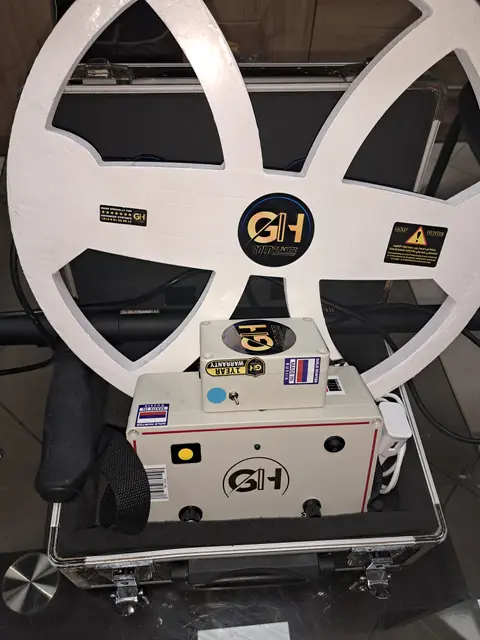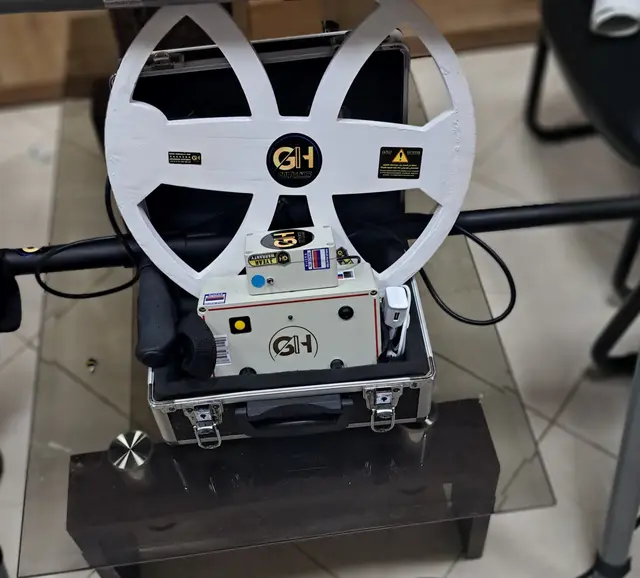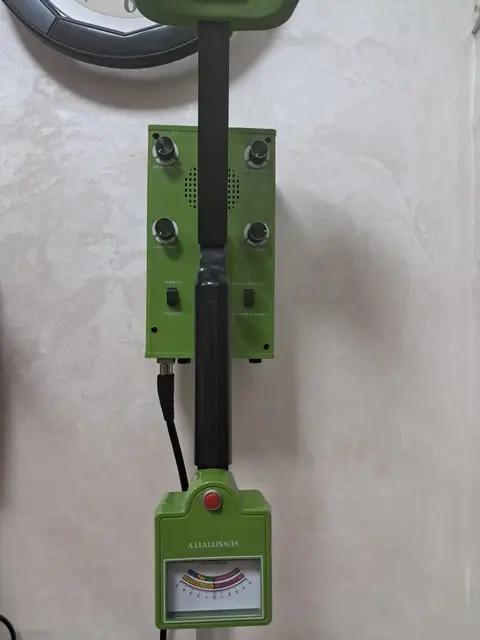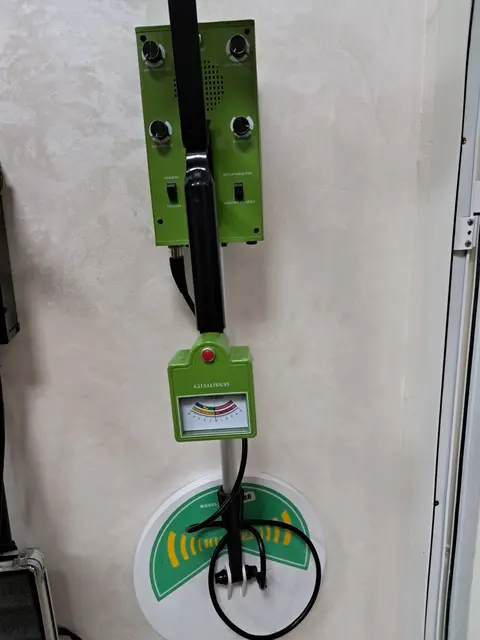
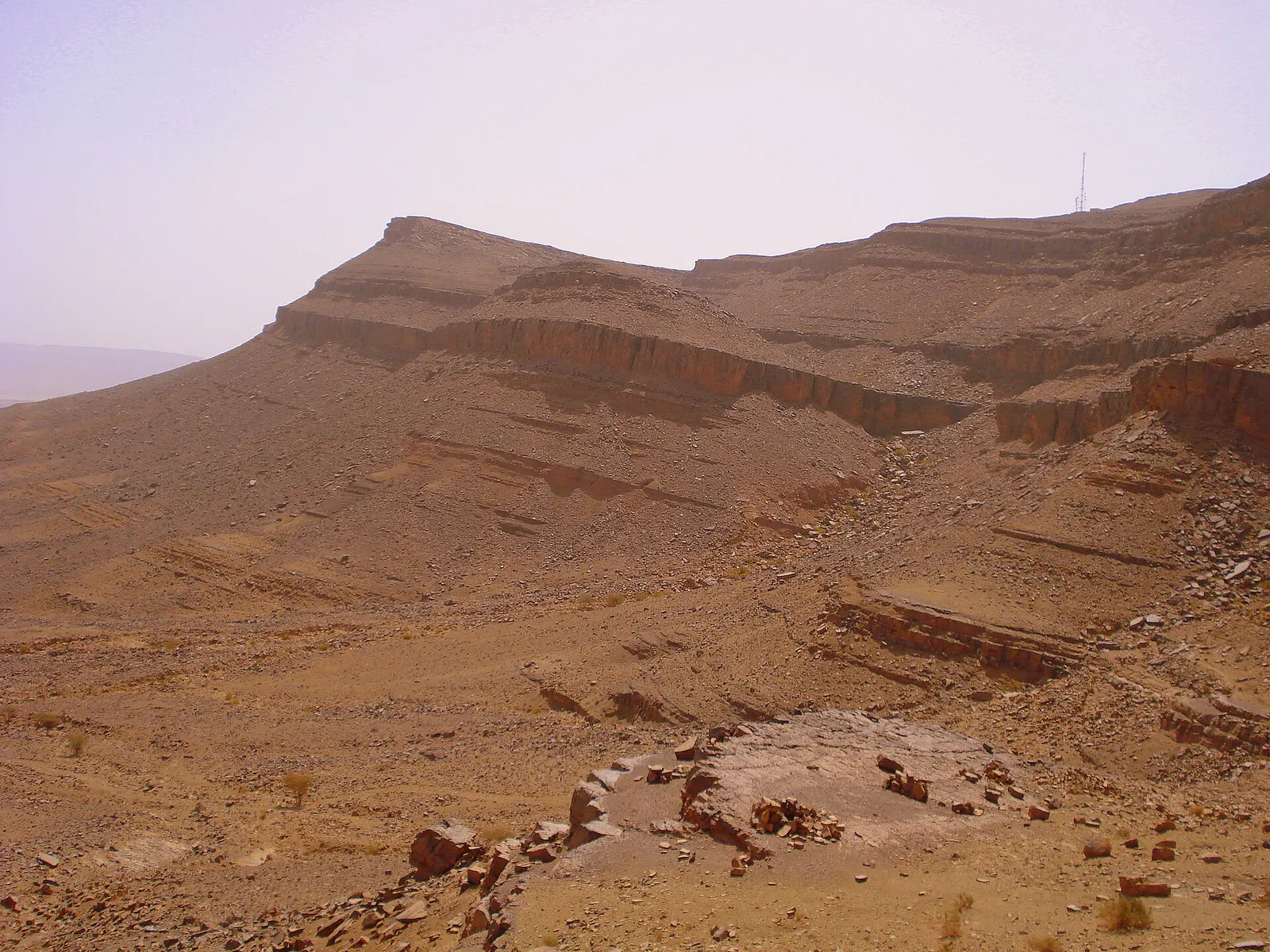
If your detector sounds off constantly, loses depth or gives signals that disappear when you dig, the problem is often not the detector. It is the ground. Much of Morocco, from the red soils of the plains to the dark rocks of the Anti-Atlas, is mineralised, and understanding that is the fastest way to find more targets.
What is mineralised ground?
Soil contains minerals that react to a detector’s magnetic field. Two families cause most of the trouble:
- Magnetic minerals, mainly iron oxides such as magnetite and maghemite. They give soils and rocks their red, brown or black colour and produce a strong signal in VLF detectors.
- Conductive salts, dissolved in water. They matter on beaches, in salt flats and in irrigated or salty soils.
The concentration varies from one metre to the next. A single dark stone can produce a louder signal than a gold ring.
What ground balance does
Ground balance teaches the detector what the ground sounds like, so that it can subtract that signal and keep only what is different. When the balance is right, the detector is quiet over empty ground and responds clearly to metal. When it is wrong, you get:
- positive noise: a beep as the coil moves down towards the ground;
- negative noise: a beep or a drop in the threshold as the coil moves up;
- lost depth: small targets hide under the ground signal.
The three types of ground balance
- Preset (factory): fixed for average soil. Fine in parks, poor on mineralised ground.
- Manual: you adjust the setting yourself until the detector stays silent while you pump the coil up and down. It gives the most control once you have practised.
- Automatic and tracking: you press a button while pumping the coil, or the detector adjusts continuously as you walk. Tracking is convenient on changing ground but can, on rare occasions, tune out a weak target if you sweep over it repeatedly.
How to ground-balance a VLF detector, step by step
- Find a clean spot with no metal. Check it first in discrimination mode.
- Lower the sensitivity to a medium level.
- Hold the coil about 15 to 20 cm above the ground, then lower it to about 2 cm and raise it again, smoothly, several times.
- Press the ground-balance button, or adjust manually, until you hear no change in the threshold while pumping.
- Raise the sensitivity step by step until the detector becomes slightly unstable, then go back one step.
- Repeat the balance whenever the soil colour or moisture changes, or every twenty to thirty minutes.
Hot rocks: signals that are not metal
A hot rock is a stone whose mineral content differs from the surrounding soil.
- A positive hot rock is more magnetic than the ground and can sound like metal.
- A negative hot rock is less magnetic than the ground, and often gives a hollow or broken tone.
To test a suspicious signal, sweep over it from several directions and at different heights. Metal usually gives a sharp, repeatable signal; a hot rock often changes or disappears when you move it out of the hole. With a pinpointer, the answer is quick. Our guide to pinpointing and digging shows the method.
Other settings that help on difficult ground
- Lower sensitivity: paradoxically, a stable detector at 70 % sensitivity finds more than a noisy one at 100 %.
- Smaller coil: it sees less of the mineralised ground at once and separates targets among rocks.
- Slower sweep: it gives the electronics time to process the signal.
- Higher or multiple frequencies for small gold, PI technology for extreme ground. See VLF versus pulse induction.
Salt and wet ground
Salt water behaves differently from iron oxides: it is conductive rather than magnetic. On wet beaches and salty soils, single-frequency VLF detectors struggle, while multi-frequency and PI detectors remain stable. After each outing in salty conditions, rinse your coil and shaft with fresh water, as explained in our maintenance guide.
Summary
Mineralised ground is the main reason detectors seem to behave badly in Morocco. Balance carefully, rebalance often, lower the sensitivity until the detector is stable, and learn to recognise hot rocks. On the most difficult ground, choose a technology designed for it.